
News Article
 November 5th, 2026 by Andy Samuel
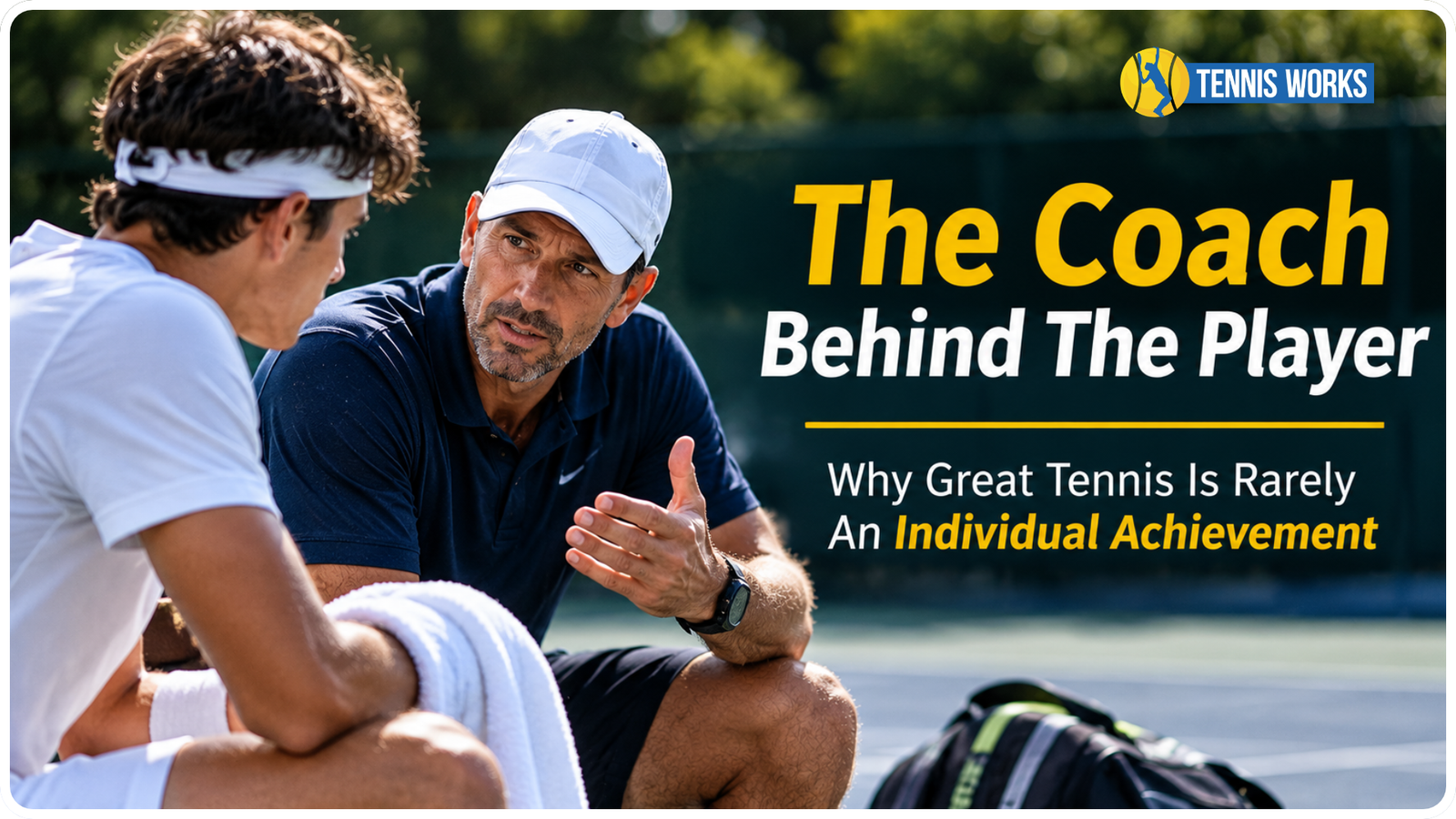
The Coach Behind The Player: Why Great Tennis Is Rarely An Individual Achievement
When we watch a Grand Slam, our eyes naturally follow the player.
We watch
- The forehand.
- The serve.
- The celebrations.
- The trophies.
- The ranking.
But one of the most interesting stories at this year’s US Open has been happening away from the court. The coaches. The people who help prepare the players to perform when the pressure is at its greatest.
The US Open recently highlighted Brad Stine, the coach behind Tommy Paul and previously part of the teams around players including Jim Courier. His story is a useful reminder that elite performance is rarely created by the player alone. And this is something I’ve believed throughout my coaching career.
A Coach’s Job Is Bigger Than The Hour On Court
One of the biggest changes I’ve seen during my years in tennis is the growing understanding of what coaching actually involves. When I first started coaching, it was easy for people to view the coach as the person who delivered the lesson.
– One hour.
– One basket of balls.
– A few technical corrections.
Job done.
But effective coaching is much bigger than that.
The best coaches create an environment.
- They build relationships.
- They develop systems.
- They communicate.
- They plan.
- They observe.
- They challenge.
- They adapt.
And they understand that player development doesn’t happen in isolated one-hour sessions.
The Best Coaches Build Systems
This is something I talk about regularly through Tennis Works. A great coaching programme should have a clear purpose.
- Where is the player now?
- Where do we want them to go?
- What skills do they need?
- What behaviours are we trying to develop?
- How are we going to measure progress?
And how does today’s session connect with what we are trying to achieve six months from now? That’s coaching. The session is simply one part of the process.
Why This Matters At Club Level
You don’t need to be coaching a Grand Slam player for this to matter. In fact, I’d argue it’s even more important at club level. A junior player may spend an hour with you each week.
What happens during the other 167 hours? That’s where your programme matters.
- Are parents engaged?
- Does the player understand what they’re working towards?
- Are there opportunities to compete?
- Does the player know how to practise?
- Are coaches communicating with each other?
- Is there a clear pathway through the programme?
These questions can make the difference between a player who stays in tennis for six months and one who stays for ten years.
Coaching Is About Creating Independence
Ultimately, I don’t want players to become dependent on their coach.
I want them to become better at understanding themselves.
- Why did that tactic work?
- Why did I lose concentration?
- What could I have done differently?
- What do I need to practise?
How can I solve this problem next time?
That’s the real measure of coaching success.
If a player can eventually walk onto court and make intelligent decisions without me standing beside them, I’ve done my job properly.
The Coach Is Part Of The Performance Team
The modern professional game has made this increasingly obvious. Players have coaches, fitness professionals, physiotherapists, psychologists, analysts and support teams. But the principle applies at every level. A coach doesn’t have to do everything. A good coach needs to know what they do best, recognise where other expertise is needed and create an environment where everyone is working towards the same objective. That’s leadership.
And that’s why I believe the future of tennis coaching isn’t simply about becoming better at feeding a ball or correcting a technical fault.
It’s about becoming better at developing people, building programmes and creating environments where players can thrive.
The player may receive the trophy.
But behind every successful player is usually a team of people who helped make that performance possible.
As coaches, we should never underestimate the influence we have.
Happy tennising.