
News Article
 August 17th, 2026 by Andy Samuel
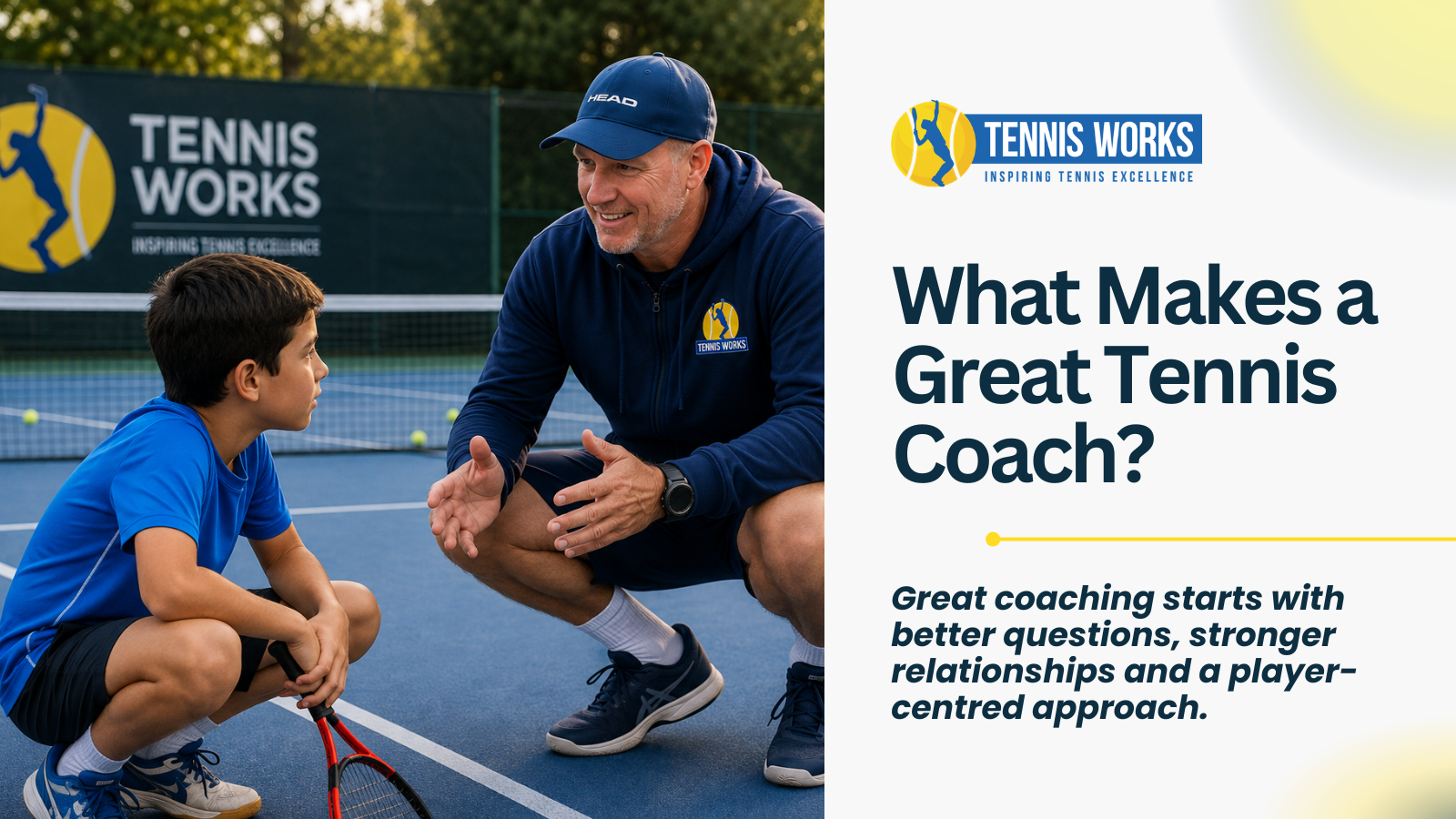
What Makes a Great Tennis Coach?
If you ask ten players what makes a great tennis coach, you’ll probably receive ten different answers. Some will say technical knowledge. Others will mention motivation, energy, or the ability to produce winning players. While all of these qualities have their place, I’ve come to believe that great coaching isn’t defined by how much a coach knows it is defined by how effectively they help people learn. After many years of coaching players of all ages, mentoring coaches, and working with clubs across the UK, one thing has become increasingly clear:
Great coaches don’t simply teach tennis they develop people.
Whether you’re coaching six-year-olds picking up a racket for the first time, competitive juniors chasing national rankings, or adults rediscovering the game, your influence reaches far beyond forehands and backhands. A great coach creates an environment where players feel safe to learn, confident to make mistakes, and motivated to improve.
Coaching Is About People Before Performance
Technical knowledge matters. Understanding biomechanics, tactics, and player development is essential. However, knowledge alone doesn’t make someone an effective coach. We’ve all seen coaches with exceptional playing backgrounds who struggle to communicate. Equally, we’ve seen coaches who were never elite players become outstanding teachers because they understand how people learn. Players don’t improve because a coach knows the answer. They improve because the coach helps them discover it. This shift from instructing to facilitating is often what separates good coaches from exceptional ones.
Great Coaches Build Relationships First
Every successful coaching relationship begins with trust. Players are far more likely to embrace challenges, accept feedback, and persevere through setbacks when they know their coach genuinely cares about their development. Building trust isn’t complicated, but it does require consistency.
Great coaches:
- Learn players’ names quickly.
- Show genuine interest in their lives outside tennis.
- Listen more than they speak.
- Celebrate effort as much as results.
- Remain approachable during both success and disappointment.
A player who feels understood will often work harder than one who simply feels instructed.
Communication Is the Coach’s Greatest Tool
One of the biggest misconceptions in coaching is that speaking more equals coaching better. In reality, the opposite is often true. The best coaches ask better questions rather than providing endless answers. Instead of saying: “Move your feet quicker.” They might ask: “What happened just before you were late to that ball?”
This encourages players to analyse their own performance. Over time, they become more independent thinkers instead of relying on constant instruction. Great communication also means adapting your language to the individual. A six-year-old doesn’t need a biomechanics lecture. An experienced tournament player may require far greater tactical detail. The message stays the same. The delivery changes.
Every Player Learns Differently
– Some players learn by watching.
– Others need to feel the movement.
– Some respond to detailed explanations.
– Others simply need one clear cue.
Great coaches recognise these differences and adapt accordingly. Rather than forcing every player into the same coaching model, they adjust their methods while keeping the learning objective consistent. This flexibility creates faster learning and greater confidence.
Planning Creates Better Coaching
Successful coaching sessions rarely happen by accident. The most effective coaches plan carefully while remaining flexible enough to adapt when circumstances change. Before every session, consider:
- What is today’s main objective?
- How will players discover the skill?
- What decisions will they need to make?
- How will success be measured?
- How will activities progress?
- What adjustments might different players require?
Planning doesn’t remove creativity. It creates the freedom to coach with purpose.
Create Game-Like Learning
Many coaches still spend too much time feeding balls in repetitive drills. While repetition has value, tennis is ultimately a decision-making sport. Players don’t receive identical balls during matches. Every rally presents new information. Great coaches design practices that encourage players to:
- Read opponents.
- Solve problems.
- Adapt under pressure.
- Make tactical choices.
- Recover between shots.
- Manage emotions.
When learning mirrors competition, transfer to match play becomes far more effective.
Feedback Should Build Confidence
Players need feedback.
But timing matters.
Too much information creates confusion.
Too little slows improvement.
Great coaches understand when to:
- Stop play.
- Let learning continue.
- Praise effort.
- Correct technique.
- Ask reflective questions.
A useful guideline is that feedback should increase clarity not dependency. The goal is always to help players become better decision-makers.
Embrace Mistakes
Many players become fearful of making mistakes because they’ve been conditioned to see errors as failure. Great coaches see mistakes differently. Mistakes provide information. If a player continually misses long, perhaps their contact point is late. If they struggle under pressure, perhaps the practice environment hasn’t challenged them enough. Instead of asking: “Why did you miss?” Ask: “What did you learn from that rally?” This simple shift changes the player’s relationship with failure.
Energy Sets the Standard
Players often reflect the emotional state of their coach. If the coach remains calm during adversity, players tend to do the same. If the coach becomes frustrated, players often mirror that behaviour. Professionalism, enthusiasm and consistency create positive learning environments. Energy isn’t about shouting. It’s about creating an atmosphere where players enjoy working hard.
Great Coaches Continue Learning
The best coaches I’ve met all share one characteristic. They never believe they’ve finished learning. They attend workshops. Observe other coaches.
- Read widely.
- Reflect after sessions.
- Ask questions.
- Seek feedback.
The coaching landscape continues to evolve. Player-centred coaching, skill acquisition, psychology and communication all continue to develop. Remaining curious ensures we continue improving.
Leadership Matters
Whether coaching one player or leading an entire programme, coaches are leaders. Players watch everything.
– How we speak.
– How we treat others.
– How we handle setbacks.
– How we celebrate success.
Culture begins with behaviour. If coaches demonstrate respect, professionalism and humility, those values naturally influence players.
Success Isn’t Measured Only by Trophies
It’s easy to judge coaching through rankings and tournament victories. However, those outcomes rarely tell the whole story. Great coaching can also be measured by:
- Increased confidence.
- Greater independence.
- Improved resilience.
- Better decision-making.
- Stronger character.
- Lifelong enjoyment of tennis.
Some players will become national champions. Most won’t. `Every player, however, deserves coaching that helps them become the best version of themselves.
The Tennis Works Philosophy
At Tennis Works, we’ve always believed coaching is about far more than improving strokes. Our aim is to develop confident players, thoughtful coaches and positive learning environments where everyone has the opportunity to thrive. That means creating sessions that challenge players, encourage reflection, build resilience and inspire lifelong learning. Technical excellence remains important. But people always come first. Because when players enjoy learning, improvement naturally follows.
Final Thoughts
Great coaching isn’t defined by having all the answers. It’s about asking better questions. Creating better environments. Building stronger relationships. Helping players think for themselves. And never stopping your own journey of learning. Whether you’re coaching beginners or elite performers, remember that every session offers an opportunity to influence someone’s confidence, character and love for the game. That responsibility is what makes coaching such a rewarding profession.
Frequently Asked Questions
Do great tennis coaches need to have been professional players?
No. Playing experience can help, but the ability to communicate, plan, observe and build relationships is often far more important than playing level.
What is the most important coaching skill?
Communication. Great coaches know how to ask effective questions, listen actively and adapt their approach to each individual player.
How can tennis coaches continue improving?
Regular reflection, observing other coaches, attending CPD workshops, seeking feedback and embracing lifelong learning are all essential habits.
Why is player-centred coaching important?
Player-centred coaching encourages athletes to think independently, solve problems and develop confidence, resulting in more adaptable and resilient performers.
Ready to take your coaching to the next level?
At Tennis Works, we support coaches, clubs and organisations through practical workshops, mentoring and coach development programmes designed to create better learning environments and lasting success. Explore our latest courses or get in touch to discover how we can help you and your coaching team grow.
Related News

The Leadership Divide: Building or Breaking your Tennis Culture
Tennis coaches and club leaders are being invited to join...

Jack Draper Appoints Jamie Delgado as Lead Coach for 2026 Season
Jack Draper, a British tennis star, has picked Jamie Delgado...

John Cavill to Present at BTCA National Conference – December 4th-5th
In the BTCA National Conference, the British Tennis Coaches Association...